Best Plant Food for Different Garden Plants
 GardeningOwl
What Plant Food Is Best for Different Garden Plants?
Choosing the right plant food can make the difference between plants that merely survive and plants that produce abundant flowers, healthy foliage and delicious crops. However, not every plant needs the same type of fertiliser.
Leafy vegetables benefit from nitrogen-rich feeds, while tomatoes and flowering plants usually need more potassium. Acid-loving plants require specialist ericaceous food, and some drought-tolerant herbs need very little feeding at all.
This garden plant feeding guide explains the best plant food for different garden plants, when to apply it and which common feeding mistakes to avoid.
What Is Plant Food?
Plant food, commonly called fertiliser, provides essential nutrients that may be missing from the soil or compost.
The three main nutrients shown on fertiliser packaging are:
- Nitrogen (N): Encourages healthy green leaves and stems.
- Phosphorus (P): Supports root growth and plant establishment.
- Potassium (K): Promotes flowering, fruit development and general plant strength.
These values are often displayed as an NPK ratio. For example, a fertiliser labelled 5-5-10 contains proportionally more potassium than nitrogen or phosphorus.
Plants also need smaller amounts of nutrients such as magnesium, calcium, iron and manganese. Specialist plant foods are often formulated to provide these nutrients for plants with particular requirements.
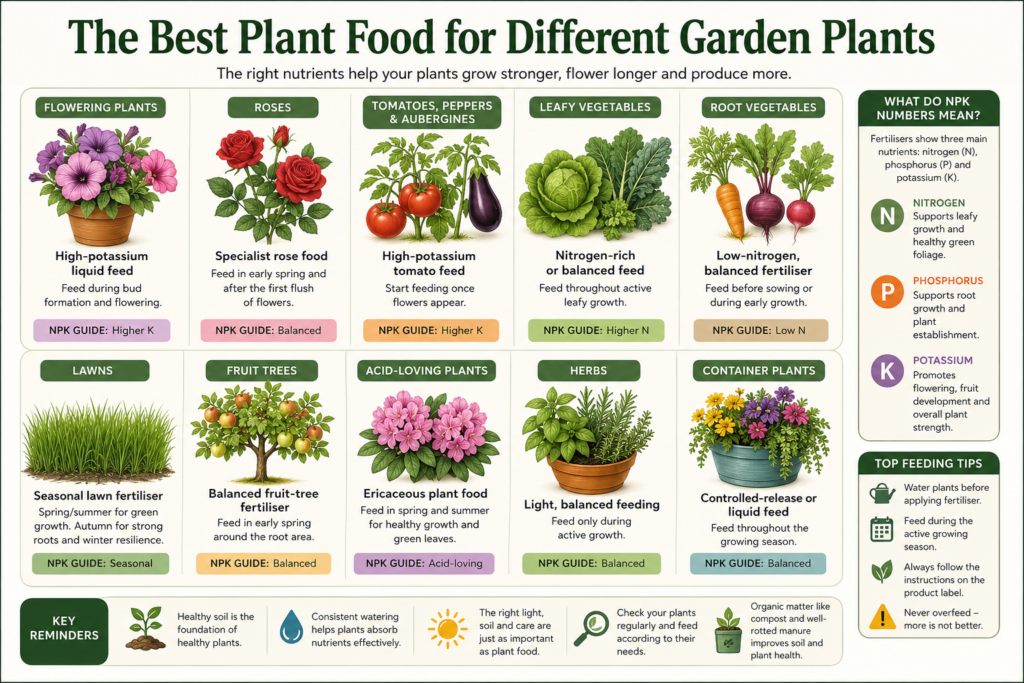
Quick Guide to the Best Plant Food for Garden Plants
| Plant type | Best plant food | When to feed |
|---|---|---|
| Flowering plants | High-potassium liquid feed | During bud formation and flowering |
| Leafy vegetables | Nitrogen-rich or balanced feed | Throughout active leafy growth |
| Tomatoes, peppers and aubergines | High-potassium tomato feed | Once flowers appear |
| Root vegetables | Low-nitrogen, balanced fertiliser | Before sowing or during early growth |
| Roses | Specialist rose food | In spring and after the first flowering |
| Lawns | Seasonal lawn fertiliser | Spring, summer or autumn, depending on the formula |
| Fruit trees | Balanced fruit-tree fertiliser | Early spring |
| Acid-loving plants | Ericaceous plant food | Spring and summer |
| Herbs | Light, balanced feeding | Only during active growth |
| Container plants | Controlled-release or liquid feed | Throughout the growing season |
Best Plant Food for Flowering Plants
Flowering plants such as petunias, geraniums, dahlias, fuchsias and begonias generally benefit from a high-potassium fertiliser.
Potassium supports the development of flower buds and can help plants produce a longer-lasting display. A liquid tomato feed is often suitable for many flowering container plants because tomato fertilisers are usually rich in potassium.
Begin feeding when flower buds start to form. Container-grown flowers may need feeding every one or two weeks during the main growing season, depending on the product instructions.
Avoid using too much nitrogen. Excess nitrogen can encourage lush leaves at the expense of flowers.
Best Plant Food for Roses
Roses are hungry plants and perform best when given a specialist rose fertiliser. Rose foods are normally formulated with a suitable balance of nitrogen for foliage and potassium for flowering.
Apply rose food in early spring when new growth begins. Many roses benefit from a second application after the first flush of flowers has faded.
Well-rotted manure or garden compost can also be spread around the base of established roses as a mulch. Keep organic mulch away from direct contact with the stems.
Always water roses after applying granular fertiliser, particularly when the soil is dry.
Best Plant Food for Tomatoes, Peppers and Aubergines
Tomatoes, peppers, chillies and aubergines need a balanced supply of nutrients while establishing. Once the first flowers appear, switch to a high-potassium tomato fertiliser.
Potassium supports flowering and fruit development. Feed container-grown plants regularly because nutrients are gradually washed out of the compost during watering.
Follow the dilution rate and feeding frequency printed on the product label. Applying a stronger mixture will not produce faster growth and may damage the roots.
Consistent watering is also essential. Plant food cannot compensate for compost that repeatedly becomes extremely wet or completely dry.
Best Plant Food for Leafy Vegetables
Leafy crops such as lettuce, spinach, kale, chard and cabbage need nitrogen to produce strong, healthy leaves.
A nitrogen-rich fertiliser can support leafy growth, particularly when plants are growing in containers or nutrient-poor soil. Organic options include well-rotted manure, composted poultry manure and nitrogen-rich liquid feeds.
Do not overfeed leafy vegetables. Excessive fertiliser can produce soft, weak growth and may make some plants more vulnerable to pests and disease.
A fertile soil enriched with garden compost before planting may provide enough nutrition for many short-season salad crops.
Best Plant Food for Root Vegetables
Carrots, parsnips, beetroot, radishes and other root vegetables do not usually need large amounts of nitrogen. Too much nitrogen can produce excessive foliage and smaller or misshapen roots.
Use a balanced, low-nitrogen fertiliser before sowing if the soil is poor. Avoid adding fresh manure immediately before growing carrots or parsnips, as overly rich or stony soil can contribute to forked roots.
Root vegetables generally perform best in loose, well-drained soil with moderate fertility.
Best Plant Food for Potatoes
Potatoes benefit from a specialist potato fertiliser or a general vegetable fertiliser that contains sufficient potassium.
Potassium supports healthy tuber development, while excessive nitrogen may encourage leafy growth instead of a strong crop beneath the soil.
Incorporate fertiliser into the planting area according to the manufacturer’s instructions. Avoid placing concentrated fertiliser directly against seed potatoes, as this can damage new roots and shoots.
Best Plant Food for Lawns
The best lawn feed depends on the season.
A spring or summer lawn fertiliser is normally higher in nitrogen to encourage dense, green growth. An autumn lawn fertiliser contains less nitrogen and more nutrients that support root development and resilience during colder weather.
Do not apply a high-nitrogen spring lawn feed late in the year. This can encourage soft growth that is more vulnerable to cold temperatures and disease.
Apply lawn fertiliser evenly and avoid exceeding the recommended amount. Water the lawn afterwards when required by the product instructions.
Best Plant Food for Fruit Trees
Apple, pear, plum and cherry trees generally benefit from a balanced fertiliser applied around the root area in early spring.
Potassium is particularly important for flowering and fruit formation. Fruit-tree fertilisers are designed to provide an appropriate nutrient balance without encouraging excessive leafy growth.
Spread the fertiliser over the soil beneath the tree’s canopy rather than piling it around the trunk. The active roots extend through the surrounding soil and are not limited to the immediate base of the tree.
A yearly mulch of garden compost or well-rotted manure can also help improve soil structure and moisture retention.
Best Plant Food for Strawberries and Soft Fruit
Strawberries, raspberries, currants and gooseberries benefit from potassium during flowering and fruit development.
Apply a high-potassium fruit fertiliser or suitable liquid tomato feed once flowering begins. Container-grown strawberries require more frequent feeding than plants growing in fertile garden soil.
Avoid excessive nitrogen, especially later in the season, as it may produce lots of leaves but fewer fruits.
Best Plant Food for Acid-Loving Plants
Rhododendrons, azaleas, camellias, pieris, heathers and blueberries prefer acidic growing conditions. Feed them with a specialist ericaceous plant food.
Ericaceous fertilisers are formulated for acid-loving plants and may include iron and other micronutrients that help maintain healthy green leaves.
Yellowing leaves with darker green veins can indicate that a plant is struggling to absorb iron, often because the soil or compost is too alkaline. Feeding may help, but the plant may also need to be moved into ericaceous compost or watered with rainwater in hard-water areas.
Best Plant Food for Hydrangeas
Most hydrangeas grow well with a balanced slow-release fertiliser applied in spring. A high-potassium feed can support flowering, but too much fertiliser may produce excessive leaves and weaker flowers.
The colour of some mophead and lacecap hydrangeas is influenced by soil chemistry rather than standard plant food alone. Acidic conditions can support blue flowers in suitable varieties, while alkaline conditions usually produce pinker flowers.
Not every hydrangea changes colour, so check the variety before using a colour-changing product.
Best Plant Food for Herbs
Herbs have different feeding requirements.
Leafy herbs such as basil, parsley, coriander, mint and chives can benefit from a light application of balanced liquid fertiliser during active growth.
Mediterranean herbs such as rosemary, thyme, sage, oregano and lavender prefer leaner, well-drained soil. Too much fertiliser can create soft growth with less concentrated flavour and fragrance.
Feed herbs lightly and avoid using strong fertilisers immediately before harvesting unless the product is clearly approved for edible plants.
Best Plant Food for Trees and Shrubs
Established trees and shrubs growing in healthy garden soil may not need regular feeding. However, young plants, recently planted specimens and shrubs showing weak growth can benefit from a balanced slow-release fertiliser in spring.
Apply the feed across the surrounding root area and water it in. Do not place fertiliser directly into contact with the trunk or stems.
Flowering shrubs may benefit from additional potassium, while evergreen shrubs need a balanced nutrient supply to maintain healthy foliage.
Best Plant Food for Container Plants
Plants in pots rely entirely on the limited amount of compost surrounding their roots. Nutrients become depleted over time and can be washed out through drainage holes.
There are two convenient feeding options:
Controlled-release fertiliser
Controlled-release granules gradually provide nutrients over several months. They are useful for containers, hanging baskets and window boxes.
Liquid plant food
Liquid fertiliser provides nutrients more quickly and is useful during periods of active growth and flowering. It must usually be reapplied regularly.
Never feed a severely dry container plant. Water it first, allow the compost to become evenly moist and apply the feed according to the label.
Organic Plant Food Options
Gardeners who prefer organic feeding methods have several options:
- Homemade garden compost
- Well-rotted animal manure
- Composted poultry manure pellets
- Seaweed-based plant food
- Comfrey feed
- Nettle feed
- Fish, blood and bone fertiliser
- Worm-cast liquid feed
Organic materials can improve soil structure as well as provide nutrients. However, “organic” does not mean unlimited use is safe. Concentrated organic feeds can still damage plants when applied too heavily.
When Should You Feed Garden Plants?
Most garden plants should be fed during their active growing season, generally from spring through summer.
Avoid routine feeding when:
- The soil is frozen or waterlogged.
- A plant is dormant.
- The plant is severely dry.
- A newly planted specimen has damaged or stressed roots.
- The plant is already growing strongly in fertile soil.
- Cold weather is approaching and the feed is high in nitrogen.
Some slow-release fertilisers are applied once in spring, while liquid feeds may be required weekly or fortnightly. Always follow the instructions for the specific product.
Common Plant-Feeding Mistakes
Using more fertiliser than recommended
Extra fertiliser does not guarantee extra flowers or fruit. Overfeeding can burn roots, damage soil life and create weak growth.
Feeding the leaves instead of the soil
Unless a product is specifically designed as a foliar feed, apply it to the compost or soil around the plant’s roots.
Feeding dry plants
Applying liquid fertiliser to extremely dry compost can damage roots. Water the plant first.
Using high-nitrogen feed on flowering plants
Too much nitrogen can produce abundant leaves but very few flowers.
Ignoring the soil
Poor drainage, incorrect soil pH, compacted ground and inconsistent watering can all cause plant problems that fertiliser will not solve.
Feeding unhealthy plants without identifying the cause
Yellow leaves or weak growth may be caused by pests, disease, root damage, poor watering or unsuitable conditions. Check the plant carefully before assuming it needs more food.
Frequently Asked Questions
Can I use tomato feed on other plants?
Yes. Tomato feed can be used on many flowering and fruiting plants because it is typically high in potassium. It is often suitable for hanging baskets, container flowers, peppers, aubergines and strawberries.
It may not be the best choice for leafy vegetables or plants that require specialist acidic conditions.
Is general-purpose plant food suitable for everything?
A balanced general-purpose fertiliser is suitable for many garden plants, particularly during early growth. However, specialist feeds may produce better results for roses, tomatoes, citrus plants, lawns and acid-loving plants.
How often should garden plants be fed?
Feeding frequency depends on the plant, soil, growing conditions and fertiliser type. Slow-release products may last for several months, while liquid feeds are often applied every one or two weeks.
Always use the product label as the main guide.
Is liquid or granular plant food better?
Neither is universally better. Granular and controlled-release feeds provide longer-lasting nutrition, while liquid feeds act more quickly and are useful for container plants.
Many gardeners use slow-release fertiliser at the beginning of the season and liquid feed during flowering.
Can overfeeding kill a plant?
Yes. Excess fertiliser can damage or kill roots, cause leaf scorch and create harmful salt levels in containers. Measure fertilisers carefully and never exceed the recommended concentration.
Final Thoughts
The best plant food for garden plants depends on what each plant is trying to produce.
Leafy plants generally require more nitrogen, while flowering and fruiting plants benefit from potassium. Root vegetables prefer moderate fertility, roses respond well to specialist rose food, and acid-loving plants need ericaceous fertiliser.
Before feeding, consider the plant’s natural requirements, the condition of the soil and the time of year. Apply the correct product at the recommended rate, water consistently and remember that healthy plant growth depends on light, soil, drainage and moisture as well as nutrients.