The Complete Garden Watering Guide: How to Water Plants for Healthier Growth
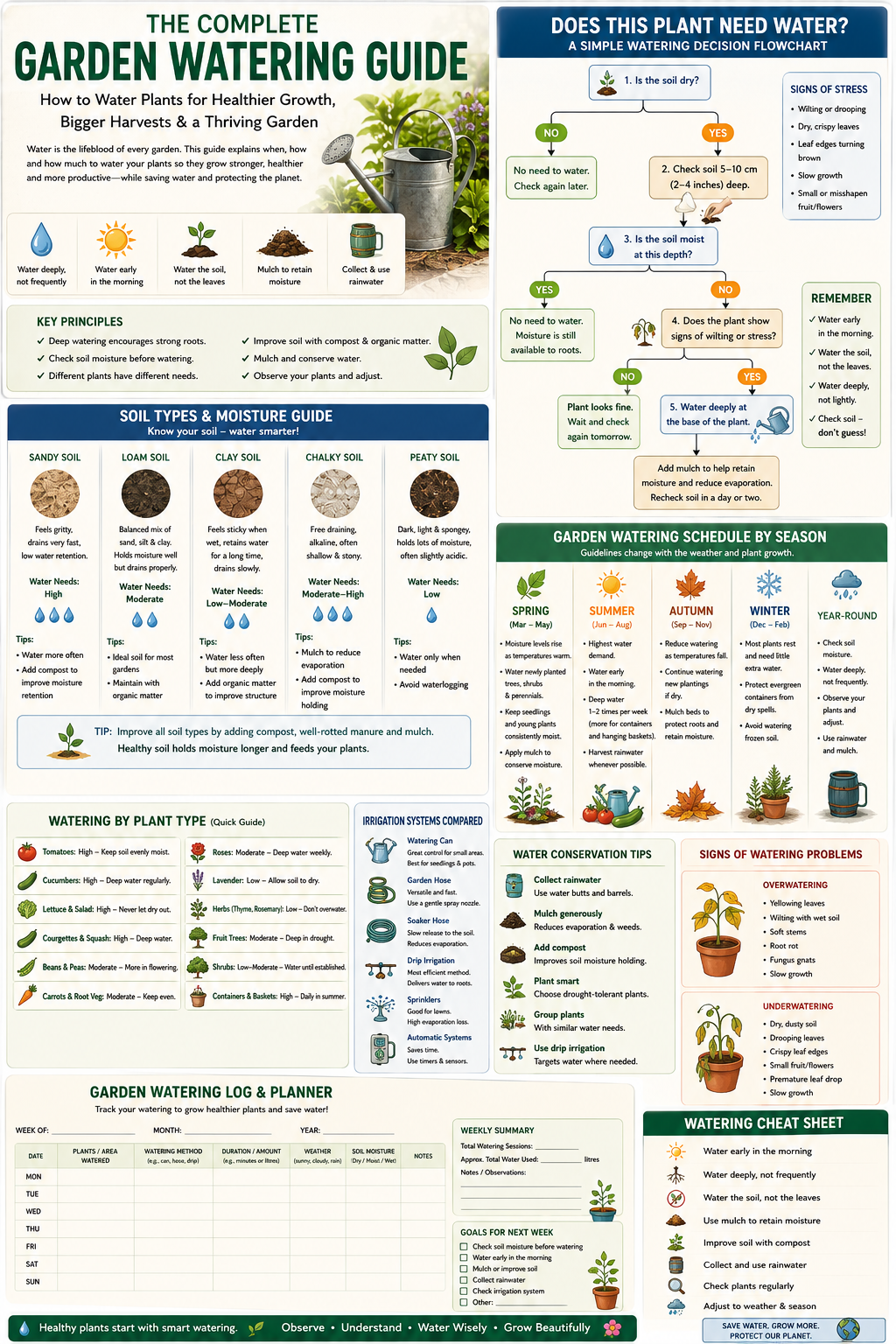
Water is one of the most important ingredients for a healthy garden, yet it's also one of the most misunderstood. Overwatering can be just as harmful as underwatering, while poor watering techniques often lead to weak roots, fungal diseases, wasted water, and disappointing harvests.
Whether you're growing vegetables, flowers, shrubs, lawns, or container plants, understanding when, how, and how much to water can dramatically improve plant health while conserving one of our most valuable natural resources.
In this comprehensive guide, you'll learn everything you need to know about watering your garden efficiently, helping your plants thrive throughout every season.
Table of Contents
- Why Proper Watering Matters
- How Plants Use Water
- When Is the Best Time to Water?
- How Often Should You Water?
- Deep Watering vs Light Watering
- Watering Different Types of Plants
- Watering Raised Beds
- Watering Containers
- Lawn Watering Guide
- Water Conservation Tips
- Signs of Overwatering
- Signs of Underwatering
- Seasonal Watering Advice
- Frequently Asked Questions
Why Proper Watering Matters
Plants rely on water for every stage of growth. Water transports nutrients from the soil, supports photosynthesis, maintains cell structure, regulates temperature, and enables flowers, fruit, and vegetables to develop properly.
Correct watering helps to:
- Develop deep, healthy roots
- Improve drought tolerance
- Increase flower production
- Produce healthier fruit and vegetables
- Reduce plant stress
- Minimise disease problems
- Improve nutrient uptake
Learning to water efficiently benefits both your garden and the environment.
How Plants Use Water
Roots absorb moisture from the soil, carrying dissolved nutrients throughout the plant. Most of this water is eventually released through tiny pores in the leaves during a process called transpiration.
Hot weather, wind, sunlight, sandy soils, and actively growing plants all increase water demand.
Understanding these natural processes helps gardeners avoid watering too frequently or too little.
When Is the Best Time to Water a Garden?
Early Morning (Best Time)
The ideal time to water is between 5:00 am and 9:00 am.
Morning watering offers several advantages:
- Less water is lost through evaporation.
- Leaves dry quickly, reducing fungal diseases.
- Plants have moisture available before the heat of the day.
- Water reaches the roots more efficiently.
Evening Watering
If morning isn't possible, early evening is the next best option.
Avoid watering too late at night, as damp foliage left overnight can encourage fungal diseases, particularly on tomatoes, roses, and cucumbers.
Avoid Midday Watering
During hot afternoons:
- Water evaporates more quickly.
- Less moisture reaches plant roots.
- Plants are already under heat stress.
If plants are wilting severely during a heatwave, watering immediately is still preferable to leaving them without moisture.
How Often Should You Water?
There is no universal watering schedule.
Watering depends on:
- Weather conditions
- Soil type
- Plant species
- Plant age
- Wind exposure
- Rainfall
- Mulching
As a general guide:
Vegetables
Deep watering two or three times each week is usually better than shallow daily watering.
Newly Planted Shrubs
Water several times each week until roots establish.
Established Trees
Occasional deep watering during prolonged dry periods.
Containers
Often require watering every day during summer.
Hanging Baskets
May need watering twice daily during very hot weather.
Always check soil moisture before watering rather than relying solely on a calendar.
Deep Watering vs Light Watering
Deep watering encourages roots to grow downwards in search of moisture.
Benefits include:
- Stronger plants
- Better drought resistance
- Improved nutrient uptake
Frequent light watering encourages shallow roots that dry out quickly during warm weather.
Aim to thoroughly soak the root zone rather than lightly wetting the soil surface.
Watering Different Types of Plants
Vegetable Gardens
Vegetables generally need consistent moisture to produce quality crops.
Pay particular attention to:
- Tomatoes
- Cucumbers
- Courgettes
- Peppers
- Beans
- Lettuce
Irregular watering can cause problems such as blossom end rot, split fruit, bitter vegetables, or reduced harvests.
Flower Beds
Annual flowers often require more frequent watering than established perennials.
Water deeply rather than little and often to encourage stronger root systems.
Deadheading and mulching also help conserve moisture.
Fruit Trees
Young fruit trees need regular watering during their first two years.
Established trees benefit from deep watering during prolonged dry spells, particularly while fruit is developing.
Roses
Water directly around the base rather than wetting the leaves.
Morning watering reduces the likelihood of fungal diseases such as black spot.
Herbs
Mediterranean herbs including rosemary, thyme, sage, and lavender prefer relatively dry conditions.
Soft herbs such as basil, parsley, and coriander appreciate more consistent moisture.
Watering Raised Beds
Raised beds drain faster than traditional garden soil.
Benefits include:
- Better drainage
- Faster soil warming
- Improved root growth
However, they usually require more frequent watering, especially during summer.
Applying mulch helps retain moisture and reduce evaporation.
Watering Containers
Container plants dry out much faster because they contain limited compost.
Best practices include:
- Check moisture daily.
- Water until excess drains from the bottom.
- Avoid allowing compost to dry completely.
- Use quality peat-free compost with water-retaining organic matter.
- Group containers together to reduce moisture loss.
Self-watering containers can reduce maintenance during hot weather.
Lawn Watering Guide
Healthy lawns rarely require frequent watering.
Instead:
- Water deeply but less often.
- Allow the soil surface to dry slightly between watering.
- Raise mower height during hot weather.
- Leave grass clippings to return moisture and nutrients.
Established lawns usually recover naturally after temporary summer browning.
Water-Saving Gardening Tips
Water conservation is increasingly important for both environmental and financial reasons.
Collect Rainwater
Installing water butts provides free, naturally soft water ideal for garden plants.
Apply Mulch
Organic mulches help:
- Reduce evaporation
- Suppress weeds
- Improve soil structure
- Increase moisture retention
Suitable mulches include compost, bark, leaf mould, and well-rotted manure.
Use Drip Irrigation
Drip irrigation delivers water directly to plant roots with minimal waste.
Benefits include:
- Lower water use
- Reduced evaporation
- Fewer weeds
- Healthier foliage
Improve Soil
Adding compost each year increases the soil's ability to hold moisture.
Healthy soil acts like a sponge during dry weather.
Signs of Overwatering
Too much water can damage roots by excluding oxygen.
Common symptoms include:
- Yellow leaves
- Wilting despite wet soil
- Soft stems
- Root rot
- Fungus gnats
- Slow growth
Always allow soil moisture to guide watering.
Signs of Underwatering
Plants lacking moisture may display:
- Dry soil
- Drooping leaves
- Crispy leaf edges
- Flower drop
- Small fruit
- Premature leaf loss
Persistent underwatering weakens plants and reduces productivity.
Seasonal Watering Guide
Spring
- Water new plants regularly.
- Check soil after dry spells.
- Apply mulch before summer.
Summer
- Water deeply in the morning.
- Focus on vegetables and containers.
- Harvest rainwater whenever possible.
Autumn
- Reduce watering as temperatures fall.
- Continue watering newly planted trees and shrubs if conditions remain dry.
Winter
- Water evergreen container plants during prolonged dry periods.
- Avoid watering frozen soil.
Common Watering Mistakes
Avoid these frequent gardening errors:
- Watering leaves instead of roots.
- Watering every day without checking soil moisture.
- Watering little and often.
- Ignoring rainfall.
- Using sprinklers during strong sunshine.
- Forgetting newly planted trees.
- Allowing containers to dry out completely.
Frequently Asked Questions
How often should I water my garden?
This depends on weather, soil, and plant type. It's generally better to water deeply a few times each week than lightly every day.
What is the best time of day to water plants?
Early morning is ideal because evaporation is lower and leaves dry quickly, helping to reduce disease.
Is it better to water little and often?
No. Deep, thorough watering encourages stronger root systems and greater drought tolerance.
Can plants recover after underwatering?
Many plants recover quickly if watered before permanent damage occurs. Consistently dry conditions, however, can reduce flowering, fruit production, and overall vigour.
Does mulch really reduce watering?
Yes. Organic mulch significantly reduces evaporation while improving soil health and moisture retention.
Conclusion
Successful garden watering is about understanding your plants rather than following a fixed schedule. By watering deeply, checking soil moisture regularly, improving soil with organic matter, and using water-saving techniques such as mulching and rainwater collection, you'll encourage healthier roots, stronger plants, and more productive harvests.
Whether you're tending a vegetable patch, ornamental borders, raised beds, or containers, good watering habits are one of the simplest ways to create a thriving, resilient garden while using water responsibly.