
The Ultimate Companion Planting Guide: Everything You Need to Know
Companion planting is one of the oldest and most effective gardening techniques still used today. By carefully selecting plants that grow well together, gardeners can naturally reduce pests, improve pollination, build healthier soil, increase biodiversity, and enjoy larger harvests without relying heavily on chemical pesticides.
Whether you're growing vegetables in raised beds, maintaining a traditional kitchen garden, or cultivating herbs and flowers in containers, companion planting can make your garden healthier and more productive.
In this complete guide, you'll learn how companion planting works, discover the best plant combinations, understand which plants should never be grown together, and find a practical companion planting chart you can use throughout the growing season.
Table of Contents
- What Is Companion Planting?
- How Companion Planting Works
- Benefits of Companion Planting
- Companion Planting Myths
- Best Vegetable Companion Plants
- Best Herb Companion Plants
- Flowers That Support Vegetable Gardens
- Companion Planting Chart
- Plants to Avoid Growing Together
- Companion Planting by Vegetable
- Companion Planting for Raised Beds
- Companion Planting in Containers
- Common Mistakes to Avoid
- Frequently Asked Questions
- Final Thoughts
What Is Companion Planting?
Companion planting is the practice of growing different plants close together because they provide mutual benefits. Some plants naturally repel insect pests, while others attract pollinators or beneficial insects that prey on aphids, caterpillars, and other garden pests.
Other companion plants improve soil fertility, provide shade during hot weather, suppress weeds, or act as living supports for climbing crops.
Rather than growing vegetables in large blocks of a single crop, companion planting encourages diversity. A mixed garden is generally more resilient to pests, diseases, and changing weather conditions.
How Companion Planting Works
Companion planting succeeds because plants interact with one another and with the insects, microorganisms, and wildlife that surround them.
Pest Repellence
Many aromatic herbs produce strong scents that interfere with the ability of insects to locate their preferred host plants.
Examples include:
- Basil
- Garlic
- Chives
- Rosemary
- Mint (best grown in containers)
Pollinator Attraction
Flowering plants attract bees, butterflies, hoverflies, and other pollinating insects.
These pollinators increase fruit production in crops such as:
- Tomatoes
- Courgettes
- Pumpkins
- Cucumbers
- Beans
- Strawberries
Beneficial Insects
Some flowers attract insects that feed on common pests.
Ladybirds help control:
- Aphids
- Whiteflies
- Scale insects
Hoverfly larvae consume hundreds of aphids during development.
Parasitic wasps target caterpillars and other destructive insects without harming your crops.
Soil Improvement
Legumes form a relationship with nitrogen-fixing bacteria, enriching the soil with nitrogen that supports leafy growth in neighbouring plants.
Examples include:
- Peas
- Broad beans
- French beans
- Runner beans
Benefits of Companion Planting
1. Natural Pest Control
One of the biggest advantages is reducing pest damage naturally.
Instead of spraying insecticides, companion planting encourages a healthy balance between pests and their natural predators.
2. Increased Pollination
A garden full of flowers attracts more bees and butterflies.
More pollination usually means:
- More tomatoes
- Larger cucumbers
- Better squash harvests
- Improved fruit production
3. Better Biodiversity
Diverse gardens are healthier ecosystems.
The greater the diversity of plants, the more resilient your garden becomes.
4. Improved Soil Structure
Deep-rooted plants break up compacted soil.
Ground-cover plants reduce erosion.
Legumes add valuable nitrogen.
5. Better Use of Space
Companion planting allows multiple crops to occupy different layers.
For example:
- Corn grows vertically.
- Beans climb the corn.
- Squash covers the soil.
This classic combination maximises production from a small space.
Companion Planting Myths
While companion planting offers genuine benefits, it's important to separate evidence-based practices from gardening folklore.
Research strongly supports:
- Increasing biodiversity
- Attracting pollinators
- Supporting beneficial insects
- Using legumes to improve soil fertility
- Crop rotation and mixed planting
Claims such as one plant dramatically improving the flavour of another or completely eliminating pests are less well supported. Companion planting works best as part of an overall gardening strategy that includes healthy soil, appropriate watering, crop rotation, and regular observation.
Best Vegetable Companion Plants
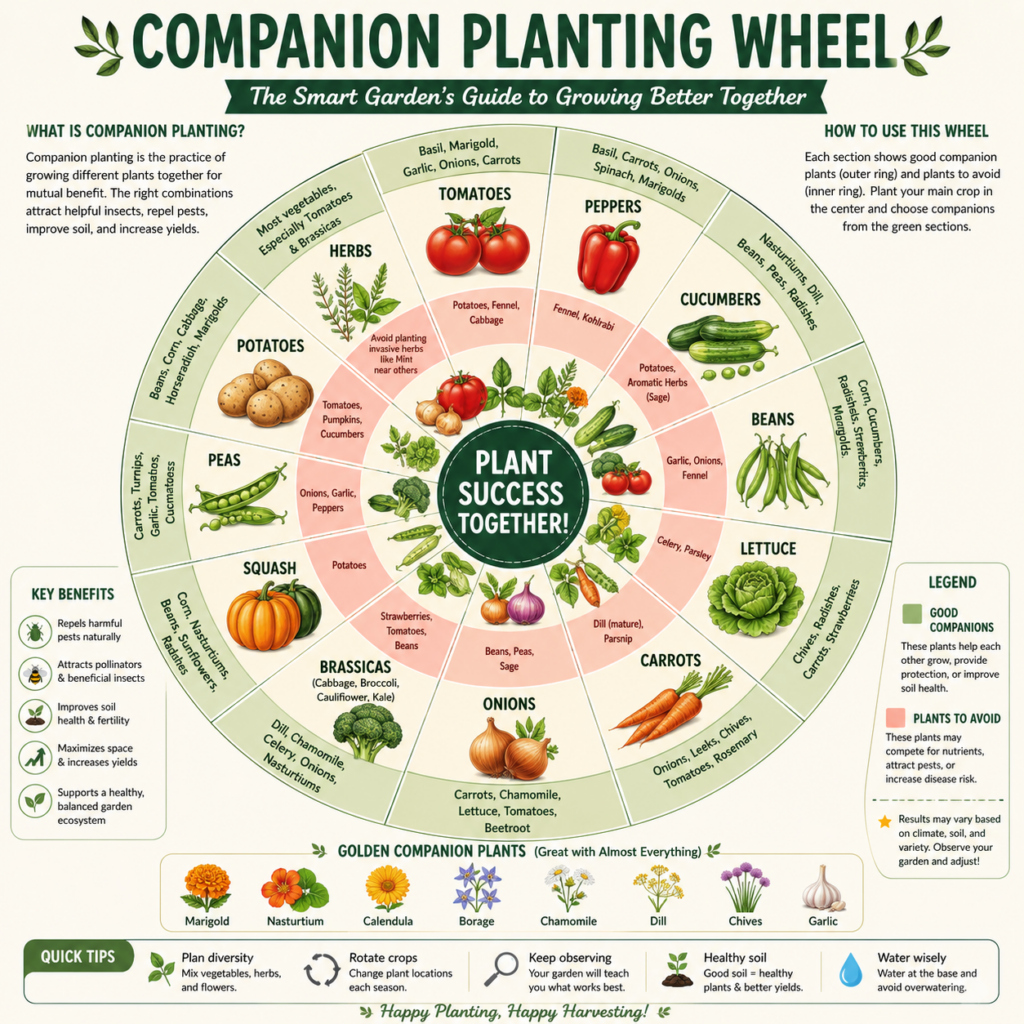
Tomatoes
Good companions:
- Basil
- Marigolds
- Calendula
- Garlic
- Lettuce
- Spinach
Avoid:
- Potatoes
- Fennel
Carrots
Good companions:
- Onions
- Leeks
- Chives
- Peas
- Lettuce
Avoid:
- Dill (when mature)
Cucumbers
Good companions:
- Nasturtiums
- Beans
- Peas
- Radishes
- Sunflowers
Avoid:
- Potatoes
Brassicas
Includes:
- Cabbage
- Kale
- Broccoli
- Cauliflower
- Brussels sprouts
Good companions:
- Dill
- Chamomile
- Nasturtiums
- Onions
Avoid:
- Strawberries
Beans
Good companions:
- Corn
- Cucumbers
- Radishes
- Potatoes
Avoid:
- Garlic
- Onions
Best Herbs for Companion Planting
Many herbs are excellent companion plants because they flower readily and attract beneficial insects.
Top choices include:
- Basil
- Dill
- Chives
- Parsley
- Oregano
- Thyme
- Sage
- Lavender
- Borage
- Chamomile
Allowing some herbs to flower can significantly increase pollinator activity throughout the garden.
Flowers That Improve Vegetable Gardens
Flowers are more than decorative—they can support biodiversity and attract helpful insects.
Excellent choices include:
- Marigolds
- Calendula
- Nasturtiums
- Cosmos
- Sweet alyssum
- Sunflowers
- Borage
- Zinnias
Plant flowers throughout the vegetable garden rather than in a single border to spread their benefits.
Companion Planting Chart
| Crop | Best Companions | Avoid |
|---|---|---|
| Tomatoes | Basil, marigolds, lettuce | Potatoes, fennel |
| Carrots | Onions, peas, lettuce | Mature dill |
| Cucumbers | Nasturtiums, beans | Potatoes |
| Beans | Corn, cucumbers | Garlic, onions |
| Peppers | Basil, onions | Fennel |
| Lettuce | Radishes, carrots | None significant |
| Spinach | Strawberries, peas | Potatoes |
| Brassicas | Dill, onions | Strawberries |
Plants That Should Never Be Grown Together
Certain combinations increase disease risk or compete for nutrients.
Examples include:
- Tomatoes and potatoes
- Beans and onions
- Beans and garlic
- Fennel and almost everything
- Brassicas and strawberries
Avoiding poor combinations can be just as important as choosing good companions.
Companion Planting for Raised Beds
Raised beds are ideal for companion planting because crops grow closer together.
A simple layout might include:
Back:
- Tomatoes
- Runner beans
Middle:
- Basil
- Peppers
Front:
- Lettuce
- Radishes
- Marigolds
This creates multiple growing layers while encouraging biodiversity.
Companion Planting in Containers
Even small patios and balconies can benefit.
Suitable combinations include:
Large pot:
- Tomato
- Basil
- Marigold
Window box:
- Lettuce
- Chives
- Calendula
Herb container:
- Thyme
- Oregano
- Sage
Avoid growing vigorous herbs like mint with other plants, as it can quickly take over.
Common Companion Planting Mistakes
Avoid these common errors:
- Planting crops too closely together
- Ignoring mature plant size
- Forgetting crop rotation
- Overwatering densely planted beds
- Assuming companion planting alone prevents all pests
- Growing invasive herbs without containment
Good garden management remains essential.
Seasonal Companion Planting Tips
Spring
- Sow peas with lettuce.
- Plant onions near carrots.
- Add early flowers for pollinators.
Summer
- Grow basil alongside tomatoes.
- Allow herbs to flower.
- Succession sow lettuce beneath taller crops.
Autumn
- Sow green manures.
- Plant garlic.
- Add compost around companion plant groupings.
Winter
- Plan next year's companion planting layout.
- Rotate crop families.
- Order seeds for spring planting.
Frequently Asked Questions
Does companion planting really work?
Yes. Companion planting is most effective when used to increase biodiversity, attract pollinators, encourage beneficial insects, and improve soil health. While not every traditional pairing has strong scientific evidence, many practices are supported by ecological research and generations of gardening experience.
What are the easiest companion plants for beginners?
Start with reliable combinations such as tomatoes and basil, carrots and onions, beans and corn, or marigolds throughout the vegetable garden.
Can companion planting replace pesticides?
Companion planting can reduce pest pressure, but it is not a complete substitute for good garden care. Healthy soil, crop rotation, proper spacing, watering, and regular monitoring are all important parts of an integrated approach.
Is companion planting suitable for organic gardening?
Absolutely. Companion planting is widely used in organic gardening because it promotes natural pest control, pollination, and biodiversity while reducing reliance on synthetic chemicals.
Conclusion
Companion planting is a practical, sustainable way to grow healthier gardens by working with nature rather than against it. Combining vegetables, herbs, flowers, and legumes creates a balanced ecosystem that encourages beneficial insects, improves soil fertility, supports pollination, and helps manage pests naturally.
No single companion planting combination will solve every gardening challenge, but a diverse, well-planned garden is often more resilient and productive than one based on monocultures. Experiment with different combinations, observe how they perform in your local conditions, and refine your planting plan each season. Over time, you'll develop a garden that is both abundant and environmentally friendly.lly.