
Part of the Gardening Owl Grow Your Own collection. Practical growing advice for gardens and allotments.
Why grow courgettes?
Courgettes are among the most rewarding summer crops for a garden. One healthy plant can produce several fruits a week in good weather, but it needs space, moisture and warmth. For a small household, starting with one or two plants is often plenty.
When to sow and plant
| Job | Typical growing window | Notes |
|---|---|---|
| Sow indoors | Mid-April to May | Use warmth and protect seedlings from frost |
| Sow directly outdoors | Late May or early June | Wait for warm soil and frost-free conditions |
| Plant out | Early summer after the last frost | Harden off seedlings first |
| Harvest | Summer into early autumn | Pick frequently while fruits are young |
In a cold or exposed area, shift dates later. Never assume a calendar date means that frost risk has passed.
Choose the right position
Use a sunny, sheltered spot with moisture-retentive but freely draining soil. Traditional bush courgettes often need about 90cm between plants. Compact varieties can grow in a large pot, ideally at least 45cm across, with generous compost and reliable watering.
Before planting, improve the soil with organic matter. Our How to Prepare Garden Soil guide explains how, and Best Compost for Vegetable Gardens helps with choosing compost.
Sow seeds in pots
- Fill individual small pots with peat-free seed compost.
- Sow one seed in each pot according to the seed packet, generally about 1.5–2.5cm deep.
- Keep warm, around 18–21°C for germination, and move into good light when seedlings emerge.
- Water gently and avoid leaving pots sitting in water.
- Harden off before planting outside, protecting young plants from cold nights and slugs.
Planting and watering
Set seedlings at about the same depth they grew in their pots, firm gently and water thoroughly. Add mulch around the root zone to help reduce evaporation, keeping it away from the stem. Water the soil at the base of the plant during dry spells; large leaves can lose substantial moisture.
Flowers, pollination and fruit
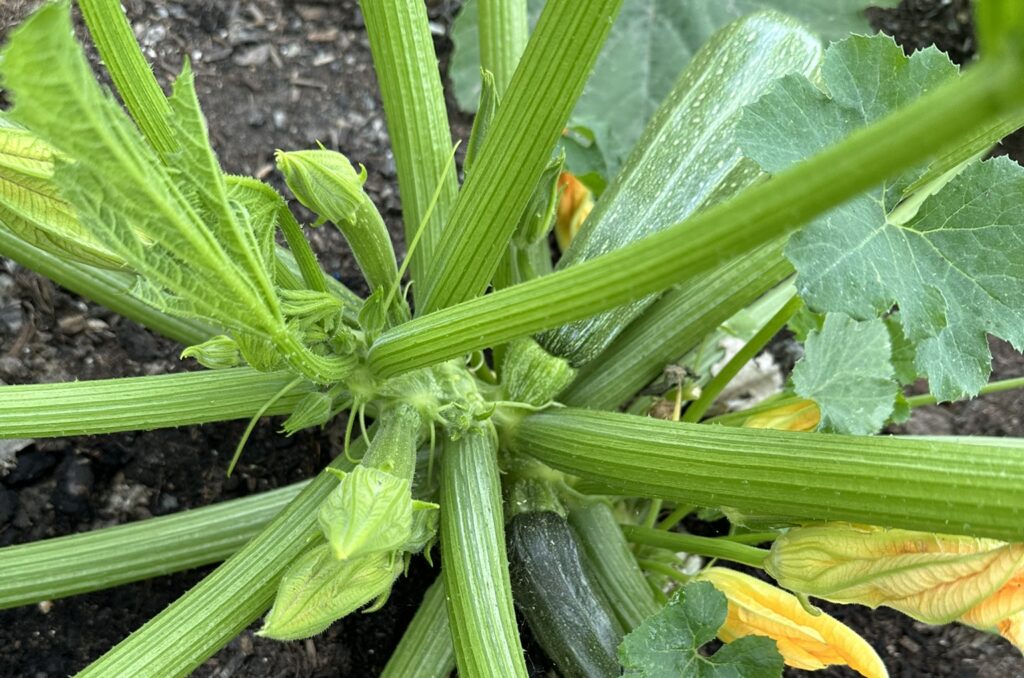
Courgette plants have separate male and female flowers. Female flowers have a small swollen fruit behind the petals, while male flowers grow on slender stalks. Early male-only flowers are normal. Poor pollination in cool wet weather can cause small fruits to fail or rot. Encourage visiting insects, and hand-pollinate an open female flower with pollen from a male flower when necessary.
See Plants for Pollinators for ideas on attracting beneficial insects.
Harvest often
Use a clean knife to cut tender courgettes when they are relatively small, often about 10–20cm depending on variety. Frequent picking encourages continued cropping. Check underneath the leaves regularly: overlooked fruits can become large marrows.
If the harvest gets away from you, read What to Do With a Glut of Courgettes.
Troubleshooting
- White powder on leaves: powdery mildew is common later in the season; improve airflow and avoid drought stress.
- Flowers but no courgettes: often an early flower balance or pollination problem.
- Yellowing and poor growth: check temperature, soil moisture and feeding before adding more fertiliser.
- Rotting tips: remove affected fruit and check moisture and pollination conditions.